How Are Car Loans Calculated: Your Ultimate Guide to Understanding Auto Financing
How Are Car Loans Calculated: Your Ultimate Guide to Understanding Auto Financing Carloan.Guidemechanic.com
Buying a car is an exciting milestone, but the financing part can often feel like navigating a complex maze. Many car buyers focus solely on the monthly payment, overlooking the intricate calculations that determine the true cost of their auto loan. This oversight can lead to paying significantly more than necessary over the life of the loan.
Understanding how car loans are calculated empowers you to make smarter financial decisions, negotiate better deals, and ultimately save thousands of dollars. This comprehensive guide will demystify the process, breaking down every component of a car loan so you can drive away with confidence, fully informed about your investment.
How Are Car Loans Calculated: Your Ultimate Guide to Understanding Auto Financing
The Core Components of Every Car Loan
Before we dive into the math, it’s crucial to understand the fundamental elements that make up any car loan calculation. Think of these as the building blocks upon which your entire loan is structured. Each plays a pivotal role in determining your monthly payment and the total amount you’ll repay.
1. The Principal Amount: The Foundation of Your Loan
The principal amount is the actual sum of money you borrow to purchase the car. It’s the starting point for all calculations and represents the value of the vehicle you’re financing, minus any money you contribute upfront. This figure isn’t just the sticker price; it often includes other elements.
Factors influencing your principal include the car’s agreed-upon sale price, any additional features or packages you choose, and mandatory fees like sales tax, registration, and documentation fees. While some fees can be paid out-of-pocket, they are often rolled into the loan, increasing your principal.
A larger principal naturally leads to a higher monthly payment and more interest paid over time. This is why strategies to reduce your principal upfront are so valuable.
Pro Tip: Your down payment and any trade-in value directly reduce your principal. The more you put down or the higher your trade-in value, the less you need to borrow, significantly impacting your total loan cost.
2. The Interest Rate (APR): The Cost of Borrowing Money
The interest rate is arguably the most critical factor in your car loan calculation. Expressed as an Annual Percentage Rate (APR), it represents the cost you pay the lender for borrowing their money. A higher APR means you’ll pay more in interest over the life of the loan.
Several factors influence the interest rate you’re offered. Your credit score is paramount; a higher score typically signals less risk to lenders, leading to lower rates. The loan term, market conditions, and even the specific lender you choose also play a significant role.
Based on my experience, even a small difference in APR can translate to hundreds, if not thousands, of dollars saved or spent over a five or six-year loan term. Always shop around for the best rates.
Common Mistake to Avoid: Don’t just accept the first interest rate offered by a dealership. Lenders often have varying rates, and pre-approval from your bank or credit union can provide a powerful negotiation tool.
3. The Loan Term: How Long You’ll Be Paying
The loan term, also known as the repayment period, is the duration over which you agree to repay the borrowed principal and interest. Car loan terms typically range from 24 to 84 months, with 60 or 72 months being common. This choice significantly impacts your monthly payment and the total interest you’ll pay.
A longer loan term results in lower monthly payments because the principal is spread out over more months. However, this convenience comes at a cost. You’ll end up paying substantially more in total interest over the life of the loan due to the extended period of borrowing.
Conversely, a shorter loan term means higher monthly payments, but you’ll pay much less in total interest and own the car outright sooner. It’s a delicate balance between affordability and overall cost.
Pro Tip from Us: While a longer term might seem appealing for lower payments, consider if you can comfortably afford a shorter term. This is one of the most effective ways to reduce the total cost of your car loan.
The Calculation Process: Demystifying the Math
Now that we understand the core components, let’s look at how they come together to determine your monthly car loan payment. While complex financial formulas exist, the underlying principles are straightforward. Lenders use an amortization schedule, which systematically pays down the principal while accounting for interest.
Understanding Amortization: The Loan’s Blueprint
Amortization is the process of paying off a debt over time through regular, fixed payments. Each payment you make consists of two parts: a portion that goes towards reducing the principal balance and a portion that covers the interest accrued since the last payment. Early in the loan term, a larger percentage of your payment goes towards interest.
As the principal balance decreases with each payment, the amount of interest accrued also lessens. Consequently, a progressively larger portion of your monthly payment begins to go towards reducing the principal. This systematic reduction ensures the loan is fully paid off by the end of the term.
Most car loans use simple interest, meaning interest is calculated daily on the outstanding principal balance. This differs from compound interest, which calculates interest on previously accrued interest.
Step-by-Step Breakdown of the Calculation
While we won’t delve into the complex algebraic formula, understanding the inputs and general flow is key. Most online car loan calculators perform these steps automatically.
-
Determine Your Net Principal: Start with the car’s agreed-upon price. Subtract any down payment you make and any trade-in value you receive. Then, add in any taxes, registration fees, or extended warranty costs that you choose to roll into the loan. This final figure is your principal.
-
Convert APR to a Monthly Interest Rate: Your APR is an annual rate. To calculate monthly payments, this needs to be converted. You simply divide your APR by 12 (the number of months in a year). For example, if your APR is 6%, your monthly rate is 0.06 / 12 = 0.005.
-
Calculate the Number of Monthly Payments: This is straightforward. Multiply your loan term in years by 12. A 5-year (60-month) loan will have 60 payments.
-
Input into a Loan Calculator: With these three figures (Principal, Monthly Interest Rate, and Number of Payments), you can use a financial calculator or an online auto loan calculator to determine your precise monthly payment. These tools handle the complex amortization formula for you.
Example Scenario:
Let’s say you finance $25,000 (Principal) at an APR of 6% for 60 months.
- Monthly interest rate = 0.06 / 12 = 0.005
- Number of payments = 60
Plugging these into a calculator would yield a monthly payment of approximately $483.32.
Factors That Change the Calculation
The initial calculation is just a baseline. Several real-world factors can adjust your principal and, consequently, your monthly payment.
-
The Power of a Down Payment: A substantial down payment is your best friend when it comes to reducing your loan amount. By paying a portion of the car’s price upfront, you directly decrease the principal you need to borrow, lowering both your monthly payments and the total interest you’ll pay. It also builds immediate equity in your vehicle.
-
Trade-In Value: If you’re trading in your old vehicle, its agreed-upon value acts much like a down payment. This amount is subtracted from the new car’s price, reducing the principal of your new loan. Always get multiple quotes for your trade-in to ensure you’re getting a fair price.
-
Additional Fees and Add-Ons: Be mindful of extra costs like documentation fees, registration fees, extended warranties, gap insurance, or even paint protection. While some are mandatory (like taxes), others are optional. Rolling these into your loan increases your principal, making your car more expensive over time. It’s always better to pay for optional add-ons separately if possible.
-
Sales Tax: Sales tax on vehicle purchases can be a significant amount, often thousands of dollars depending on the car’s price and your state’s tax rate. Many buyers opt to finance this tax along with the vehicle, which adds to the principal and accrues interest.
Beyond the Monthly Payment: Understanding the True Cost
While the monthly payment is what you budget for, it doesn’t tell the whole story of your car loan’s expense. To truly understand your financial commitment, you need to look at the total interest paid and the overall cost of the loan. This holistic view reveals the true impact of your financing choices.
Total Interest Paid: The Hidden Cost
The total interest paid over the life of your loan is the sum of all the interest portions from each of your monthly payments. This figure can be surprisingly high, especially with longer loan terms or higher interest rates. It represents the actual "cost of borrowing" for your vehicle.
To calculate this, simply multiply your monthly payment by the total number of payments (loan term in months). Then, subtract the original principal amount. The remainder is the total interest you will have paid.
Pro Tips from Us: To minimize total interest, aim for the shortest loan term you can comfortably afford, make the largest down payment possible, and secure the lowest interest rate. Even making a few extra payments or rounding up your monthly payment can shave off significant interest over time.
Total Cost of the Loan: Your Full Investment
The total cost of the loan is the ultimate figure you need to focus on. It encompasses both the principal amount you borrowed and the total interest you’ll pay. This sum represents the actual financial outlay for your car, excluding maintenance, fuel, and insurance.
Understanding this total cost allows for genuine comparison between different loan offers. A loan with a slightly lower monthly payment but a much longer term might appear attractive, but its total cost could be significantly higher due to accumulated interest. Always ask lenders for the total cost of the loan, not just the monthly payment.
Amortization Schedule: Your Loan’s Financial Road Map
An amortization schedule is a table detailing each payment made on a loan, showing how much of each payment is applied to interest and how much to the principal. It also shows the remaining principal balance after each payment. This schedule is a powerful tool for understanding your loan’s progression.
While lenders might not automatically provide a detailed amortization schedule, you can easily generate one using online calculators. Reviewing it helps you visualize how slowly the principal decreases in the early stages and how making extra payments can accelerate your equity build-up.
Credit Score’s Pivotal Role
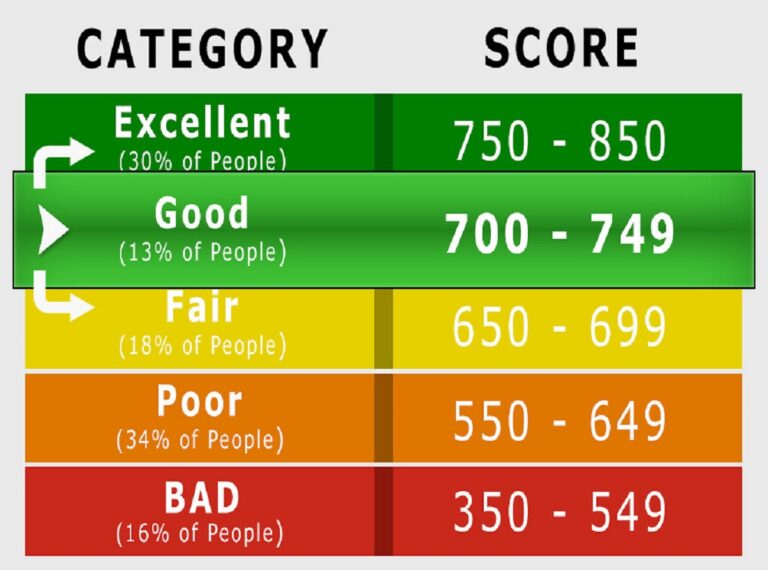
Your credit score is not just a number; it’s a powerful financial report card that lenders use to assess your creditworthiness. When it comes to car loans, a good credit score is your golden ticket to favorable terms and lower interest rates. Conversely, a lower score can mean higher rates and more expensive financing.
Lenders use your credit score to gauge the risk of lending money to you. A higher score (generally 700+) indicates a history of responsible borrowing and timely payments, making you a less risky borrower. This translates into offers with lower APRs, which directly reduces your monthly payment and the total interest you’ll pay.
Common Mistake to Avoid: Applying for a car loan without checking your credit score first. Knowing your score allows you to anticipate what rates you might qualify for and gives you time to address any inaccuracies on your report.
Tips for Improving Your Credit Before Applying
If your credit score isn’t where you’d like it to be, taking steps to improve it before applying for a car loan can save you thousands.
- Pay Bills on Time: Payment history is the biggest factor in your credit score. Make sure all your credit card, utility, and loan payments are consistently on time.
- Reduce Debt: Lowering your credit card balances and other outstanding debts can improve your credit utilization ratio, which positively impacts your score.
- Check Your Credit Report: Obtain free copies of your credit report from all three major bureaus (Experian, Equifax, TransUnion) and dispute any errors. You can learn more about managing your credit at trusted external sources like the Consumer Financial Protection Bureau (CFPB) website.
- Avoid New Credit Applications: Limit new credit applications in the months leading up to your car loan application, as each inquiry can temporarily ding your score.
Practical Strategies for a Better Car Loan
Securing a favorable car loan isn’t just about luck; it’s about being prepared and strategic. Armed with an understanding of how car loans are calculated, you can implement several tactics to ensure you get the best possible terms. These strategies can significantly impact both your monthly payment and the total cost of your vehicle.
1. Get Pre-Approved Before You Shop
One of the most powerful strategies is to get pre-approved for a loan before you even set foot in a dealership. Visit your bank, credit union, or online lenders to obtain a pre-approval letter. This document specifies the maximum amount you can borrow, your interest rate, and the loan term.
Pre-approval transforms you into a cash buyer in the eyes of the dealership, giving you leverage. You’ll know your financing options upfront and won’t be solely reliant on the dealer’s financing department. It allows you to focus on negotiating the car price, not the loan terms.
2. Shop Around for Interest Rates
Just as you wouldn’t buy the first car you see, don’t settle for the first loan offer. Interest rates can vary significantly between lenders. Credit unions often offer highly competitive rates, but it’s wise to check with multiple banks and online lenders as well.
Compare the APRs, not just the monthly payments. Even a half-percentage point difference can save you hundreds over the loan’s life. This due diligence is a critical step in minimizing your total loan cost.
3. Negotiate the Car Price, Not Just the Payment
Dealers often try to anchor negotiations around the monthly payment. While this is important for your budget, focusing solely on it can obscure the actual cost of the vehicle. A dealer might offer a lower monthly payment by extending the loan term, which increases your total interest paid.
Always negotiate the out-the-door price of the car first, before discussing financing. Once you’ve agreed on a price, then you can discuss how to finance that specific amount. This separates the car purchase from the loan agreement.
4. Consider a Shorter Loan Term (If Affordable)
While a longer loan term offers lower monthly payments, it costs you more in total interest. If your budget allows, opting for a shorter term, such as 48 or 60 months instead of 72 or 84, can lead to substantial savings. You’ll pay off the car faster and reduce the total interest burden.
Pro Tip: Use an online calculator to see how different loan terms impact both your monthly payment and the total interest paid. This visual comparison can motivate you to choose a shorter, more cost-effective term.
5. Make Extra Payments When Possible
Even small additional payments can significantly impact your loan. Because car loans use simple interest, any extra money you pay directly reduces your principal balance. This means less interest accrues going forward, shortening your loan term and saving you money.
Consider rounding up your payment each month, or making an extra principal-only payment whenever you have spare cash, like from a bonus or tax refund. This strategy can shave months off your loan and reduce your total interest paid.
For more detailed insights into selecting the right financing, you might find our guide on Choosing the Right Car Loan Lender particularly helpful. Furthermore, explore other strategies in our article on Smart Car Buying Strategies to become an even savvier buyer.
Common Mistakes to Avoid
Even with a solid understanding of car loan calculations, it’s easy to fall into common traps. Being aware of these pitfalls can help you steer clear of costly errors and ensure a smoother, more financially sound car-buying experience.
-
Focusing Only on the Monthly Payment: This is perhaps the most significant mistake. While an affordable monthly payment is crucial for your budget, it doesn’t reveal the total cost of the loan. A low payment achieved through an extended term means you’ll pay significantly more interest. Always look at the total cost of the loan and the APR.
-
Not Understanding the Full Loan Terms: Always read the fine print. Ensure you understand the APR, any hidden fees, prepayment penalties (though rare for car loans, always check), and exactly what is included in the principal. Don’t be rushed through the paperwork.
-
Skipping the Pre-Approval Process: Entering a dealership without pre-approved financing puts you at a disadvantage. You lose valuable negotiation power and might end up accepting a less favorable interest rate offered by the dealership, which may include markups.
-
Ignoring Additional Fees and Add-Ons: Be vigilant about what’s being added to your loan. Extended warranties, paint protection, fabric guards, and VIN etching can substantially inflate your principal if rolled into the loan. Question every additional charge and only accept what you genuinely need or want, paid for separately if possible.
-
Not Considering the Total Cost of Ownership: Beyond the loan calculation, remember that owning a car involves other significant costs like insurance, maintenance, fuel, and depreciation. Factor these into your overall budget to ensure the car is truly affordable for you in the long run.
Conclusion: Drive Away Informed and Confident
Understanding how car loans are calculated is no longer a niche skill; it’s a vital component of smart financial literacy for anyone considering a vehicle purchase. By grasping the interplay of principal, interest rate, and loan term, you transform from a passive recipient of loan offers into an empowered, informed consumer.
You now know that a lower monthly payment isn’t always the best deal, and that a strong credit score is your ally in securing favorable terms. You also have the strategies to negotiate effectively, minimize total interest paid, and avoid common financial missteps.
Armed with this comprehensive knowledge, you’re well-equipped to navigate the complexities of auto financing. Take the time to compare offers, ask informed questions, and focus on the total cost of the loan, not just the monthly payment. Do your homework, and you’ll not only drive away in your dream car but also with the peace of mind that comes from making a financially sound decision.