Mastering Car Loan Journal Entries: Your Ultimate Guide to Auto Loan Accounting
Mastering Car Loan Journal Entries: Your Ultimate Guide to Auto Loan Accounting Carloan.Guidemechanic.com
Navigating the world of car loans can be complex enough, but for businesses and individuals committed to meticulous financial record-keeping, the journey doesn’t end with signing the dotted line. Understanding how to properly record a car loan in your accounting books – known as making a car loan journal entry – is absolutely crucial. It’s not just about compliance; it’s about gaining crystal-clear insight into your financial health, ensuring accurate tax reporting, and making informed future decisions.
As an experienced professional in financial accounting, I’ve seen firsthand how a solid grasp of these entries can transform financial clarity. This comprehensive guide will demystify the process, breaking down every aspect of auto loan accounting from the initial purchase to the final payment. Our goal is to equip you with the knowledge to manage your car loan accounting with confidence, ensuring your financial statements reflect reality with precision.
Mastering Car Loan Journal Entries: Your Ultimate Guide to Auto Loan Accounting
Why Accurate Car Loan Accounting Matters
Many people, especially those managing personal finances, might overlook the structured accounting for a car loan. However, whether you’re a small business owner relying on vehicles for operations or an individual dedicated to detailed personal finance tracking, accurate auto loan accounting is indispensable. It provides a true picture of your assets and liabilities, impacts your income statement, and helps you monitor your debt effectively.
Ignoring proper journal entries can lead to misstated financial positions, incorrect tax deductions, and a general lack of understanding about where your money is truly going. It’s more than just tracking payments; it’s about recognizing the true cost of ownership and the financial structure of your loan. This meticulous approach ensures your financial records stand up to scrutiny, whether from a tax authority or your own internal review.
The Foundation: Key Accounts Involved in Car Loan Journal Entries
Before we dive into specific journal entries, it’s essential to understand the primary accounts that come into play. These accounts represent different facets of your financial position and activity, all interconnected through the life of your car loan. Getting familiar with these will make the subsequent journal entries much clearer.
1. Vehicle (Asset Account):
When you purchase a car, it becomes an asset for your business or personal balance sheet. This account records the initial cost of the vehicle. Assets are resources owned by the entity that are expected to provide future economic benefits.
2. Car Loan Payable (Liability Account):
This account represents the outstanding amount you owe to the lender for your car. It’s a liability because it’s an obligation to pay a specific amount in the future. Loans are typically classified as either current (due within one year) or non-current (due beyond one year) on the balance sheet.
3. Interest Expense (Expense Account):
Every car loan comes with interest, which is the cost of borrowing money. This account records the portion of your payment that goes towards interest. Interest expense directly impacts your income statement, reducing your net income.
4. Depreciation Expense (Expense Account):
Cars, like most assets, lose value over time due to wear and tear, obsolescence, and age. Depreciation is the accounting method used to allocate the cost of a tangible asset over its useful life. This expense also impacts your income statement.
5. Cash (Asset Account):
This fundamental account tracks the money you use to make down payments and regular loan installments. Cash outflows reduce this account.
Understanding these five accounts forms the bedrock of properly recording your car loan journal entry. Each transaction related to your car loan will involve a debit and a credit to at least two of these accounts, maintaining the fundamental accounting equation: Assets = Liabilities + Equity.
The Initial Journal Entry: Acquiring the Vehicle and Loan
The first significant step in auto loan accounting is recording the actual purchase of the vehicle and the associated loan. This entry establishes the asset on your books and simultaneously recognizes the liability you’ve incurred. It sets the stage for all subsequent entries.
Let’s consider a common scenario: you purchase a car for $30,000. You make a down payment of $5,000, and the remaining $25,000 is financed through a car loan.
The Initial Journal Entry would look like this:
| Date | Account | Debit | Credit |
|---|---|---|---|
| Vehicle | $30,000 | ||
| Cash | $5,000 | ||
| Car Loan Payable | $25,000 | ||
| To record the purchase of the vehicle with a down payment and a loan. |
Explanation in Detail:
- Debit Vehicle ($30,000): By debiting the "Vehicle" account, you increase the value of your assets. The car is now on your books at its full purchase price.
- Credit Cash ($5,000): You decrease your "Cash" asset account because you’ve paid out $5,000 as a down payment.
- Credit Car Loan Payable ($25,000): You increase your "Car Loan Payable" liability account. This represents the amount you owe to the lender, establishing the debt on your balance sheet.
This entry accurately reflects the transaction: you acquired an asset worth $30,000, reduced your cash by $5,000, and took on a liability of $25,000. It’s a crucial starting point for all your accounting for car loans.
Journalizing Regular Car Loan Payments: Principal and Interest
Making monthly car payments is a regular occurrence, but simply debiting an "Expense" account for the full payment amount would be a significant error. Each payment you make typically consists of two main components: a portion that reduces the loan principal car loan and a portion that covers the interest expense car loan. Understanding this distinction is vital for accurate financial reporting.
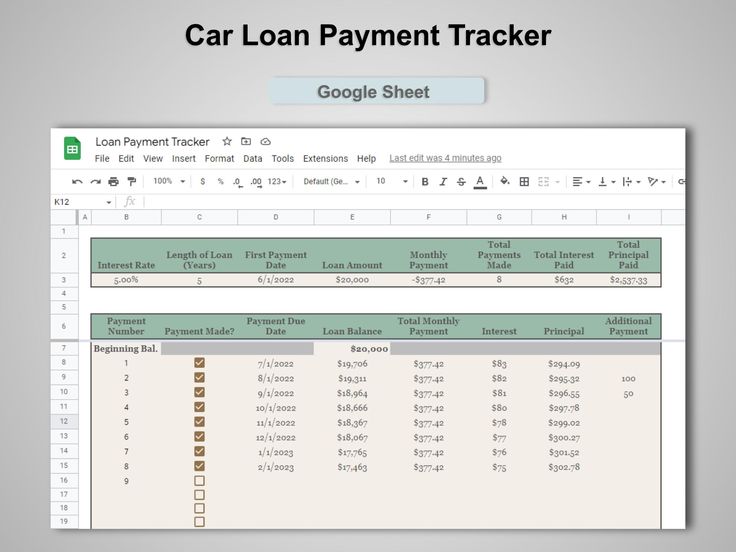
Lenders provide an amortization schedule that details how each payment is split between principal and interest over the life of the loan. As an experienced accountant, I always advise clients to obtain this schedule, as it’s the most reliable source for breaking down your payments.
Let’s assume your monthly car payment is $500. For the first payment, perhaps $150 goes towards interest, and $350 goes towards the principal balance.
The Journal Entry for a Monthly Payment would be:
| Date | Account | Debit | Credit |
|---|---|---|---|
| Car Loan Payable | $350 | ||
| Interest Expense | $150 | ||
| Cash | $500 | ||
| To record the monthly car loan payment. |
Explanation in Detail:
- Debit Car Loan Payable ($350): This debit reduces your liability. Each time you make a principal payment, the outstanding balance of your loan decreases. This is a critical step in showing your debt reduction over time.
- Debit Interest Expense ($150): This debit recognizes the cost of borrowing for the current period. Interest expense is an operating expense that appears on your income statement. It’s important to only recognize the interest incurred during the specific period.
- Credit Cash ($500): This credit reduces your cash balance by the total amount of the payment made.
As the loan matures, the proportion of interest to principal in each payment changes. Typically, more interest is paid at the beginning of the loan, and more principal is paid towards the end. Journalizing car payments accurately requires you to follow this amortization schedule precisely for each entry.
Depreciation: An Essential Companion Entry
While not directly part of the loan itself, accounting for depreciation is an integral part of owning a vehicle, especially for businesses. Depreciation reflects the economic reality that assets like cars lose value over time. From an accounting perspective, it helps match the cost of the asset to the revenue it generates over its useful life, aligning with the matching principle.
For most vehicles, the straight-line depreciation method is commonly used due to its simplicity. This method allocates an equal amount of depreciation expense to each full period of an asset’s useful life.
Formula for Straight-Line Depreciation:
(Cost of Asset – Salvage Value) / Useful Life
Let’s assume the $30,000 car has an estimated useful life of 5 years and an estimated salvage value (what you expect to sell it for at the end of its useful life) of $5,000.
Annual Depreciation = ($30,000 – $5,000) / 5 years = $5,000 per year.
Monthly Depreciation = $5,000 / 12 months = $416.67 (approximately)
The Monthly Depreciation Journal Entry would be:
| Date | Account | Debit | Credit |
|---|---|---|---|
| Depreciation Expense | $416.67 | ||
| Accumulated Depreciation | $416.67 | ||
| To record monthly depreciation of the vehicle. |
Explanation in Detail:
- Debit Depreciation Expense ($416.67): This recognizes the portion of the vehicle’s cost that has been "used up" during the period. It’s an expense that appears on the income statement, reducing net income.
- Credit Accumulated Depreciation ($416.67): This is a contra-asset account. It reduces the book value of the asset (Vehicle) without directly crediting the "Vehicle" account. Accumulated depreciation is reported on the balance sheet car loan as a deduction from the original cost of the asset, showing its net book value.
Properly recording depreciation car loan is vital for presenting an accurate financial picture. It reflects the true cost of using the asset and ensures your balance sheet doesn’t overstate the value of your vehicle.
Year-End Adjustments and Financial Reporting
At the end of an accounting period (e.g., month, quarter, or year), certain adjustments may be necessary to ensure your financial statements are accurate. For car loans, two key areas often require attention: accrued interest and proper presentation on financial statements.
Accrued Interest:
If your accounting period ends between your car loan payment dates, you might need to accrue interest. This means recognizing interest expense that has been incurred but not yet paid. For example, if your payment is due on the 15th of each month, and your fiscal year ends on December 31st, you would have accrued 16 days of interest (December 15th to December 31st) that won’t be paid until the January payment.
Journal Entry for Accrued Interest (Example):
| Date | Account | Debit | Credit |
|---|---|---|---|
| Dec 31 | Interest Expense | $XX | |
| Interest Payable | $XX | ||
| To record accrued interest at year-end. |
This ensures your income statement car loan reflects all interest expenses for the period, regardless of when cash changes hands. When the payment is finally made in January, you’ll debit "Interest Payable" and "Car Loan Payable" and credit "Cash."
Presenting Car Loans on the Balance Sheet:
On the balance sheet car loan, the "Car Loan Payable" needs to be split into current and non-current portions.
- Current Portion of Car Loan Payable: This represents the principal amount of the loan that is due to be paid within the next 12 months.
- Non-Current Portion of Car Loan Payable: This represents the principal amount of the loan that is due beyond the next 12 months.
This distinction is crucial for financial analysis, as it gives creditors and investors a clear view of the company’s short-term and long-term liabilities. For example, if you have $25,000 outstanding and $4,000 of that is due in the next year, then $4,000 would be current, and $21,000 would be non-current.
The financial statements car loan also includes the impact of depreciation and interest expense on the income statement, offering a complete picture of the vehicle’s financial effect on the entity.
Pro Tips from Us: Navigating Advanced Scenarios
Based on my experience, simply recording initial entries and monthly payments isn’t always enough. Life, and finances, can throw curveballs. Here are some pro tips for handling more advanced scenarios related to your car loan.
1. Refinancing a Car Loan:
If you refinance your car loan, you’re essentially taking out a new loan to pay off the old one. The accounting involves two main steps:
- Paying off the old loan: Debit "Car Loan Payable (Old)" and Credit "Cash" (or the new loan proceeds).
- Recording the new loan: Debit "Cash" (for any additional funds received) or directly debit "Car Loan Payable (Old)" and Credit "Car Loan Payable (New)". Any fees associated with refinancing should also be expensed or capitalized based on their nature. This process essentially swaps one liability for another on your books.
2. Selling the Car Before the Loan is Paid Off:
This scenario requires careful calculation of the gain or loss on sale.
- Remove the asset and its accumulated depreciation: Debit "Accumulated Depreciation" and Credit "Vehicle" (for its original cost).
- Record the cash received from the sale: Debit "Cash".
- Pay off the remaining loan balance: Debit "Car Loan Payable" and Credit "Cash".
- Calculate and record the gain or loss: If the sale price (minus remaining loan payoff) is more than the vehicle’s book value (Cost – Accumulated Depreciation), you have a gain (Credit "Gain on Sale of Asset"). If it’s less, you have a loss (Debit "Loss on Sale of Asset").
3. Early Payoff Considerations:
When you pay off a loan early, you’ll need to make a final journal entry that debits "Car Loan Payable" for the remaining principal balance and credits "Cash" for the amount paid. Always confirm the exact payoff amount with your lender, as it might differ slightly from your calculated principal balance due to prorated interest or early payoff penalties/discounts. This final entry brings your "Car Loan Payable" balance to zero.
Common Mistakes to Avoid
Even with a solid understanding, it’s easy to fall into common traps when handling auto loan accounting. Avoiding these mistakes will save you time, ensure accuracy, and prevent potential headaches down the road.
1. Not Separating Principal and Interest:
This is perhaps the most frequent error. Many mistakenly debit an "Auto Loan Expense" for the entire payment. This leads to an overstatement of expenses and an understatement of liability reduction. Remember, only the interest portion is an expense; the principal portion reduces your debt. Always use your amortization schedule!
2. Forgetting Depreciation (for business use):
For businesses, failing to record depreciation car loan means your asset’s value is overstated on the balance sheet, and your expenses are understated on the income statement. This can lead to incorrect profit figures and missed tax deductions. Even if the car is primarily for personal use, but has some business use, understanding this concept is vital for claiming appropriate deductions.
3. Ignoring Loan Covenants (if business loan):
Some business car loans come with covenants, which are conditions the borrower must meet. While not directly a journal entry, breaching a covenant can have severe financial implications. Stay aware of these terms and ensure your accounting reflects your compliance.
4. Lack of Documentation:
Always keep meticulous records of your loan agreement, amortization schedule, payment confirmations, and any related communication with your lender. This documentation is invaluable for audits, reconciling accounts, and resolving any discrepancies. Digital copies are great, but a well-organized physical file can also be a lifesaver.
5. Inconsistent Application of Accounting Methods:
Once you choose a depreciation method or a way to categorize expenses, stick with it. Changing methods frequently without proper justification can lead to confusion and makes financial comparisons difficult. Consistency is key to reliable financial reporting.
Conclusion: Driving Towards Financial Clarity
Mastering car loan journal entry is more than just an accounting chore; it’s a fundamental practice for anyone serious about financial clarity. From the initial purchase to every subsequent payment and the crucial consideration of depreciation, each step contributes to an accurate and insightful financial picture. By diligently applying the principles discussed in this guide, you ensure your financial records are precise, reliable, and compliant.
Remember, every debit and credit tells a story about your financial position. Understanding the intricacies of accounting for car loans empowers you to make smarter financial decisions, accurately report your financial health, and navigate the complexities of vehicle ownership with confidence. Don’t let your car loan be a mystery in your books; transform it into a testament to your financial diligence.
For further reading on general accounting principles, you might find our guide on Understanding the Basics of Debits and Credits helpful. Also, for a deeper dive into asset management, consider our article on Advanced Depreciation Methods for Business Assets. For reliable information on consumer car loans, you can always refer to reputable financial resources like the Consumer Financial Protection Bureau (CFPB) at www.consumerfinance.gov.