Unlocking the Best Deal: Your Super Comprehensive Guide to Annual Percentage Rate (APR) Car Loans
Unlocking the Best Deal: Your Super Comprehensive Guide to Annual Percentage Rate (APR) Car Loans Carloan.Guidemechanic.com
Buying a car is an exciting milestone for many. Whether it’s your first set of wheels or an upgrade, the joy of driving away in a new vehicle is unparalleled. However, beneath the gleaming paint and new car smell lies a critical financial decision: how you pay for it. For most, this means taking out a car loan, and at the heart of every car loan is a figure that can significantly impact your financial well-being: the Annual Percentage Rate (APR).
Understanding your car loan APR is not just about crunching numbers; it’s about empowerment. It’s the key to unlocking the best deal, saving thousands of dollars over the life of your loan, and making a truly informed financial decision. As an expert in car financing, I’ve seen firsthand how a clear understanding of APR can transform a buyer’s experience. This comprehensive guide will demystify the Annual Percentage Rate for car loans, equipping you with the knowledge to navigate the complexities of auto financing with confidence.
Unlocking the Best Deal: Your Super Comprehensive Guide to Annual Percentage Rate (APR) Car Loans
What Exactly is Annual Percentage Rate (APR)? More Than Just the Interest Rate
When you borrow money for a car, you pay back the principal (the amount you borrowed) plus a cost for borrowing that money. This cost is primarily the interest. However, the Annual Percentage Rate (APR) is far more comprehensive than a simple interest rate. It represents the true annual cost of your loan.
Think of it this way: the interest rate is just one ingredient in the financial recipe. The APR, on the other hand, is the entire meal, including all the spices and seasonings. It encompasses not only the interest charged on the principal amount but also most, if not all, of the additional fees associated with the loan. This might include origination fees, processing fees, or even certain insurance premiums bundled into the loan.
Why does this distinction matter so much? Because a loan with a seemingly low interest rate might have a higher APR due to various fees, making it more expensive overall. Conversely, a slightly higher interest rate with fewer fees could result in a lower APR and a better deal for you. Always look at the APR when comparing loan offers, as it provides a standardized way to evaluate the true cost of borrowing.
How is Your Car Loan APR Calculated? The Formula Unpacked
While the exact mathematical formula for calculating APR can be complex, involving present value and future value calculations, the core concept is straightforward. The APR takes the total cost of borrowing – meaning all interest charges and applicable fees – and spreads it out over the loan’s term, expressing it as an annual percentage. It’s designed to give you a single, comparable figure that reflects the entire cost of credit.
Lenders use various factors to determine your specific APR, which we’ll delve into shortly. Essentially, they assess the risk involved in lending to you. The higher they perceive that risk, the higher the APR they will likely offer. This calculation aims to compensate the lender for the time value of money, the risk of default, and the administrative costs of setting up and servicing your loan.
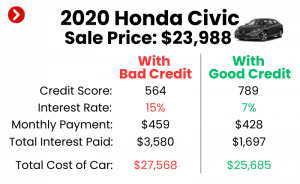
Based on my experience, many buyers mistakenly focus solely on the monthly payment without understanding how the APR dictates the total amount they will pay over the loan’s life. A lower APR directly translates to less money paid back to the lender, making it a critical number to understand and negotiate.
Key Factors That Influence Your Car Loan APR
Your car loan APR isn’t a random number; it’s a direct reflection of several interconnected financial factors. Lenders meticulously evaluate these elements to determine the level of risk you present as a borrower. Understanding these influences is your first step towards securing a favorable rate.
Your Credit Score
Undoubtedly, your credit score is the most significant determinant of your car loan APR. It’s a numerical representation of your creditworthiness, reflecting your history of borrowing and repaying debt. Lenders use scores like FICO and VantageScore to quickly assess your risk.
A high credit score (typically above 720) signals to lenders that you are a reliable borrower with a strong track record of making payments on time. This reduced risk often translates into access to the lowest available interest rates and, consequently, the most attractive APRs. Conversely, a low credit score indicates a higher risk of default, leading lenders to charge a higher APR to compensate for that increased risk. Before even thinking about car shopping, checking your credit score is a crucial preliminary step.
Loan Term (Length of Loan)
The length of your loan, often expressed in months (e.g., 36, 48, 60, 72, or even 84 months), also plays a pivotal role in determining your APR. While a longer loan term might offer the allure of lower monthly payments, it typically comes with a higher APR.
This is because extending the repayment period increases the lender’s exposure to risk over a longer duration. There’s a greater chance of economic downturns, changes in your financial situation, or the car depreciating significantly over time. Pro tips from us: while longer terms might seem appealing for budget management, aim for the shortest term you can comfortably afford to minimize the total interest paid and often secure a lower APR.
Down Payment Amount
The size of your down payment directly impacts your car loan APR. A substantial down payment reduces the amount you need to borrow, thereby lowering the lender’s risk. When you have more equity in the vehicle from day one, you are less likely to default on the loan.
Lenders view a significant down payment as a sign of financial stability and commitment. It also helps to prevent you from being "upside down" on your loan, where you owe more than the car is worth, especially in the early years of ownership. Aiming for at least a 20% down payment on a new car and 10% on a used car can often lead to more favorable APR offers.
Debt-to-Income (DTI) Ratio
Your debt-to-income (DTI) ratio is another critical metric lenders use to assess your ability to manage additional debt. It’s calculated by dividing your total monthly debt payments by your gross monthly income. A lower DTI ratio indicates that you have sufficient income to cover your existing financial obligations and take on a new car payment without undue strain.
Lenders prefer borrowers with a DTI ratio of 43% or lower, though this can vary. A high DTI suggests that you might be overextended financially, increasing the risk of missed payments. Improving your DTI before applying for a car loan, perhaps by paying down other debts, can significantly improve your chances of securing a better APR.
Vehicle Age & Type
The specific car you choose can also influence your APR. Lenders often consider the age and type of the vehicle as part of their risk assessment. New cars typically qualify for lower APRs because they hold their value better, are less prone to mechanical issues, and are easier for lenders to recover value from if repossession becomes necessary.
Used cars, especially older models, may come with higher APRs due to increased depreciation, higher maintenance risks, and potentially a shorter lifespan. Additionally, specialized or luxury vehicles might have different financing terms compared to standard economy cars, reflecting their unique market dynamics.
Current Market Interest Rates
Beyond your personal financial profile, the broader economic environment plays a role. The prevailing market interest rates, heavily influenced by the Federal Reserve’s monetary policy, impact the cost of borrowing for lenders themselves.
When the Fed raises its benchmark interest rates, the cost of borrowing generally increases across the board, leading to higher APRs for consumers. Conversely, when rates are lowered, you might find more attractive loan offers. While you can’t control market rates, being aware of them helps you set realistic expectations for the APRs you might qualify for.
Understanding Different Types of APRs in Car Loans
Not all APRs are created equal. While the concept of an "Annual Percentage Rate" remains consistent, how it behaves over the life of your loan can differ. Recognizing these variations is essential for making an informed decision.
Fixed APR: Stability and Predictability
The most common type of APR for car loans is a fixed APR. As the name suggests, a fixed APR remains constant throughout the entire repayment period of your loan. This means your interest rate, and consequently the interest portion of your monthly payment, will not change from the day you sign the loan agreement until the day you make your final payment.
The primary advantage of a fixed APR is predictability. You know exactly what your payments will be each month, making it easier to budget and manage your finances. There are no surprises if market interest rates fluctuate. For most car buyers, a fixed APR offers peace of mind and is generally the preferred option.
Variable APR: Risk and Potential Savings (Less Common for Standard Car Loans)
While less common for standard new and used car loans, some financing products, especially certain lines of credit or older financing structures, might offer a variable APR. A variable APR can fluctuate over the life of the loan based on an underlying index, such as the prime rate.
If the index rate goes up, your APR will increase, leading to higher monthly payments or a longer repayment term. Conversely, if the index rate falls, your APR could decrease, potentially saving you money. While a variable APR might start lower than a fixed APR, it introduces a degree of uncertainty. Based on my experience, for the stability required for a significant purchase like a car, fixed-rate loans are almost always recommended to avoid unexpected financial burdens.
Introductory/Promotional APR: The Allure of "0% APR" Deals
You’ve probably seen advertisements for "0% APR" car loans. These are a form of introductory or promotional APR offered by manufacturers or dealerships, typically on new vehicles, for a limited time. While incredibly attractive, these offers come with strict conditions.
Often, only buyers with impeccable credit scores (usually 780+) qualify. The 0% APR might only apply for a specific period (e.g., 36 or 48 months), after which a higher, standard APR kicks in. If you fail to make even one payment on time, the promotional rate can be revoked, and a much higher penalty APR applied retroactively. Pro tips from us: Always read the fine print on 0% APR deals. Calculate the total cost of the loan and compare it against a standard loan with a reasonable APR, especially if the 0% offer forces you into a shorter term with higher monthly payments you can’t comfortably afford. Sometimes, taking a small rebate and a low-interest loan is a better deal than a 0% APR with no rebate.
The Pre-Approval Advantage: Your Secret Weapon
Before you even set foot on a dealership lot, one of the most powerful steps you can take is getting pre-approved for a car loan. This process involves applying for a loan with a bank, credit union, or online lender before you’ve picked out a specific car. The lender reviews your financial information and, if approved, offers you a specific loan amount at a certain APR, valid for a set period.
What Pre-Approval Is and Its Benefits
Pre-approval provides you with a concrete offer from a lender, detailing the maximum amount you can borrow and the APR you qualify for. It’s a conditional offer, meaning it’s dependent on verifying your information and the vehicle you choose meeting the lender’s criteria.
The benefits are substantial. Firstly, it gives you a clear budget, so you know exactly what you can afford, preventing you from falling in love with a car outside your financial reach. Secondly, and perhaps most importantly, pre-approval transforms you into a cash buyer in the eyes of the dealership. This significantly enhances your negotiating power, not just on the car’s price but also on any financing offers the dealer might present.
Pro Tips: Shop Around for Pre-Approvals
Don’t settle for the first pre-approval you receive. Based on my experience, shopping around for pre-approvals from multiple lenders – banks, credit unions, and online providers – is a game-changer. Each lender has different risk assessments and pricing models, so what one offers as a good APR, another might beat.
Applying for multiple pre-approvals within a short window (typically 14-45 days, depending on the credit scoring model) will usually be treated as a single hard inquiry on your credit report. This allows you to compare offers without significant credit score impact. for an in-depth look at this crucial step.
Negotiating Your Car Loan APR: Don’t Leave Money on the Table
Many car buyers believe the APR offered by a lender is non-negotiable. This is a common misconception that can cost you hundreds, if not thousands, of dollars over the life of your loan. Just like the price of the car itself, the APR is often open to negotiation, especially when you come prepared.
Importance of Negotiation
Every percentage point, or even half a percentage point, off your APR can translate into significant savings. For example, on a $30,000 loan over 60 months, reducing your APR from 6% to 5.5% could save you hundreds of dollars in total interest paid. This money can stay in your pocket or be used for other financial goals.
Negotiating your APR is not about being aggressive; it’s about being informed and confident. It’s a demonstration that you’ve done your homework and understand the value you bring as a borrower.
Strategies for Effective APR Negotiation
- Come with Pre-Approval in Hand: This is your strongest leverage. When a dealer knows you already have an outside offer, they are more likely to try and beat it to keep your financing business. Show them your best pre-approval offer and ask if they can match or beat it.
- Know Your Credit Score: Before any negotiation, pull your credit report and score. Knowing your score allows you to understand what rates you genuinely qualify for and to identify any errors that might be dragging your score down.
- Separate Car Price from Financing: Common mistakes to avoid are bundling the car price negotiation with the loan negotiation. Always negotiate the car’s price first, as if you were paying cash. Once you’ve agreed on a vehicle price, then discuss financing. This prevents the dealer from shifting numbers around to make it seem like you’re getting a good deal on both when you might be getting a bad deal on one.
- Be Prepared to Walk Away: This is perhaps the most powerful negotiating tactic. If you’re not getting the APR you deserve, be ready to take your business elsewhere. There are always other dealerships and other lenders. Your willingness to walk away signals that you are serious and won’t be pressured into an unfavorable deal.
Decoding the Loan Disclosure: What to Look For Beyond the APR
Once you’ve negotiated an attractive APR, the journey isn’t over. Before signing any documents, it’s absolutely crucial to thoroughly review the loan disclosure. This document outlines the full terms and conditions of your agreement. Don’t rush this step, as it contains all the essential details that will govern your loan for years to come.
Total Cost of the Loan
While the APR gives you a clear percentage, the loan disclosure will explicitly state the "total cost of the loan" in dollars. This figure includes the principal amount borrowed plus all interest payments and fees over the entire loan term. It’s the ultimate bottom line of what you’ll pay. Always compare this figure across different offers, as it paints the clearest picture of your financial commitment.
Monthly Payment & Loan Term
Verify that the monthly payment amount matches what you discussed and that the loan term (e.g., 60 months) is correct. Ensure these align with your budget and long-term financial plan. A lower monthly payment might look appealing, but if it’s stretched over an excessively long term, it could significantly increase the total cost of the loan due to more interest accrual.
Any Hidden Fees or Charges
Scrutinize the document for any unexpected fees or charges that weren’t discussed or included in the initial APR calculation. These could be administrative fees, documentation fees, or charges for optional add-ons that were slipped in. If you see anything unfamiliar, ask for a clear explanation and justification. If it’s something you don’t want or need, don’t be afraid to ask for its removal.
Prepayment Penalties (If Any)
Some loan agreements include prepayment penalties, which are fees charged if you pay off your loan early. While less common in standard auto loans, it’s essential to check for this clause. If you plan to make extra payments or pay off your loan ahead of schedule, a prepayment penalty could negate some of your savings. Ideally, look for loans without these penalties, offering you the flexibility to pay down debt faster. For more information on what to look for, refer to resources like the Consumer Financial Protection Bureau (CFPB) on auto loans: .
Common Mistakes to Avoid When Financing a Car
Even with a good understanding of APR, buyers can fall into common traps. Based on my experience in the field, these missteps can lead to higher costs, financial stress, and regret. Being aware of them is the first step to avoiding them.
Focusing Only on Monthly Payments
This is arguably the most common and costly mistake. While managing your monthly budget is important, obsessing solely over the lowest possible monthly payment can lead to extending the loan term unnecessarily. This often results in a higher overall APR and a significantly greater total amount of interest paid over the life of the loan. Always consider the total cost of the loan in conjunction with the monthly payment.
Not Checking Your Credit Score
Many individuals go into car financing negotiations without a clear picture of their credit health. Not knowing your credit score means you can’t accurately assess if the APR offered is fair or if you’re being quoted a higher rate than you deserve. Always obtain your credit report and score from all three major bureaus (Equifax, Experian, TransUnion) well in advance.
Ignoring the Total Cost of the Loan
The APR is a percentage, but the total cost of the loan is the actual dollar amount you will pay. Failing to calculate or consider this figure means you might unknowingly agree to a deal that costs you thousands more than necessary. Always ask for the total amount due, including all principal, interest, and fees, before signing.
Skipping the Pre-Approval Step
As discussed, pre-approval is your negotiating superpower. Walking into a dealership without a pre-approved loan from an outside lender puts you at a significant disadvantage. You lose the leverage to compare offers and might be swayed by the dealer’s financing, which isn’t always the most competitive.
Not Reading the Fine Print
Loan documents are often lengthy and filled with legal jargon, but every word matters. Common mistakes to avoid include skimming or outright skipping the fine print. This is where hidden fees, prepayment penalties, or unfavorable clauses might reside. If you don’t understand something, ask for clarification until you do. Never sign anything you haven’t fully read and comprehended.
Pro Tips for Securing the Best Car Loan APR
Now that you’re armed with a deep understanding of APR and common pitfalls, let’s look at actionable strategies to ensure you secure the most favorable car loan APR possible. These pro tips from us are distilled from years of observing successful financing strategies.
Improve Your Credit Score
This is foundational. If you have time before your car purchase, focus on improving your credit score. Pay all your bills on time, reduce existing credit card balances, and avoid opening new lines of credit. Even a 30-50 point increase in your score can move you into a better credit tier, qualifying you for significantly lower APRs.
Save for a Larger Down Payment
The more money you put down upfront, the less you need to borrow, and the lower the risk for the lender. Aim for at least 20% on a new car. A substantial down payment not only reduces your principal but often helps you secure a lower APR and can even make you eligible for better loan terms.
Keep Your Debt-to-Income (DTI) Low
Before applying for a car loan, consider paying down other debts, especially high-interest credit card balances. A lower DTI ratio demonstrates to lenders that you have ample disposable income to comfortably manage your new car payment, making you a more attractive borrower and potentially qualifying you for better rates.
Shop Multiple Lenders
Never accept the first loan offer you receive. This is one of the most critical pro tips. Apply for pre-approvals from at least 3-5 different sources: your personal bank, local credit unions, and reputable online lenders. Compare their APRs, fees, and terms. Use the best offer as leverage when negotiating with other lenders or the dealership.
Consider a Shorter Loan Term (If Affordable)
While a longer loan term offers lower monthly payments, it almost always comes with a higher APR and a greater total cost. If your budget allows, opt for the shortest loan term you can comfortably afford. A 36 or 48-month loan often has a significantly lower APR than a 72 or 84-month loan, saving you substantial money over time. for more insights on managing dealer offers.
Conclusion: Empowering Your Car Buying Journey
Understanding the Annual Percentage Rate (APR) for your car loan is not merely a financial exercise; it’s an act of empowerment. It transforms you from a passive recipient of loan offers into an informed, strategic negotiator. By grasping what APR truly represents, how it’s calculated, and the myriad factors influencing it, you gain control over one of the largest financial decisions many individuals make.
Remember, the lowest monthly payment isn’t always the best deal. The lowest APR, coupled with a manageable loan term and transparent fees, is your true indicator of a favorable financing agreement. Take the time to prepare, shop around, negotiate, and meticulously review all documents. Your diligence will be rewarded with significant savings and the peace of mind that comes from making a smart, financially sound decision. Drive away confident, knowing you secured the best possible car loan APR for your circumstances.
Share your experiences or questions about car loan APR in the comments below – your insights could help others on their car buying journey!