Unlocking the Best Deals: Your Ultimate Guide to Savings and Loan APR for a 4-Year Car Loan
Unlocking the Best Deals: Your Ultimate Guide to Savings and Loan APR for a 4-Year Car Loan Carloan.Guidemechanic.com
Buying a car is a significant financial decision, and for many, it involves securing a loan. Navigating the world of car loans, especially understanding the Annual Percentage Rate (APR) and how your personal savings play a role, can feel daunting. If you’re considering a 4-year car loan, you’re in a sweet spot that balances manageable monthly payments with lower overall interest compared to longer terms.
This comprehensive guide is designed to empower you with the knowledge needed to secure the most favorable terms for your next vehicle. We’ll dive deep into what APR truly means, how a 4-year loan term impacts your finances, and the strategic importance of your savings. By the end, you’ll be equipped to make smart, informed choices that save you money and give you peace of mind.
Unlocking the Best Deals: Your Ultimate Guide to Savings and Loan APR for a 4-Year Car Loan
Decoding the APR for Your 4-Year Car Loan: More Than Just Interest
When you take out a car loan, the number you’ll hear most often is the Annual Percentage Rate, or APR. Many people mistakenly think APR is just the interest rate, but it’s much more than that. Understanding this distinction is crucial, especially when evaluating different loan offers for your 4-year commitment.
What Exactly is APR?
The APR represents the true annual cost of borrowing money. It includes not only the interest rate charged by the lender but also certain fees associated with the loan. These fees might include origination fees, processing fees, or even some closing costs, all rolled into a single percentage. This standardized rate allows you to compare different loan products more accurately, giving you a clearer picture of what you’ll actually pay over the life of your 4-year loan.
Based on my experience, focusing solely on the advertised interest rate can be a costly mistake. Always ask for the full APR when comparing loan offers.
Why a 4-Year Term? Striking a Balance
Choosing a 4-year (48-month) car loan term is often a popular choice for good reasons. It hits a sweet spot between shorter terms, which have higher monthly payments, and longer terms, which accrue significantly more interest over time. A 4-year term typically offers a manageable monthly payment while still allowing you to pay off your vehicle relatively quickly.
This shorter duration often translates to a lower overall cost of borrowing compared to, say, a 6-year or 7-year loan. You build equity faster and spend less time underwater on your loan, where you owe more than the car is worth.
Components That Shape Your APR
Several elements come together to form the APR you’re offered. The primary component is the interest rate, which is the cost of borrowing the principal amount. Beyond that, various fees contribute to the overall percentage.
For example, some lenders might charge an application fee or a documentation fee. While these might seem small individually, when calculated as part of the total cost of borrowing over four years, they can incrementally push your APR higher. Always scrutinize the loan disclosure for all charges.
Factors That Dictate Your Car Loan APR
Your APR isn’t a fixed number; it’s a personalized rate determined by a combination of factors. Understanding these elements is key to actively working towards a lower APR for your 4-year car loan. Pro tips from us: The more you know about these factors, the better equipped you’ll be to negotiate or improve your standing before applying.
1. Your Credit Score: The Undisputed King
Without a doubt, your credit score is the single most influential factor in determining your car loan APR. Lenders use your credit score as a primary indicator of your creditworthiness – essentially, how likely you are to repay the loan on time. A higher credit score signals lower risk to the lender, which typically translates into a lower APR.
Borrowers with excellent credit (generally 760+) can expect to receive the most competitive rates, sometimes even below 3-4%. Those with good credit (670-759) will still qualify for favorable rates, while average or fair credit (580-669) will see higher APRs. Subprime borrowers (below 580) often face significantly higher rates, sometimes in double digits, reflecting the increased risk.
2. The Loan Term: How 4 Years Impacts Your Rate
While we’re focusing on a 4-year loan, it’s important to understand its position relative to other terms. Generally, shorter loan terms, like 2 or 3 years, often come with slightly lower APRs because the lender’s risk is spread over a shorter period. However, the monthly payments are substantially higher.
A 4-year term offers a good balance. It usually carries a lower APR than longer terms (5, 6, or 7 years) because the risk of depreciation outpacing loan repayment is reduced. Longer terms lead to more interest paid over time and often come with higher overall APRs.
3. Your Down Payment: A Powerful Shield Against Risk
Making a substantial down payment is one of the most effective ways to lower your APR. A larger down payment reduces the amount of money you need to borrow, which in turn lowers the lender’s risk. When you put more money down, you have more equity in the car from day one.
This equity acts as a buffer. If you default, the lender is less likely to lose money. Common mistakes to avoid are underestimating the power of a down payment. Aiming for at least 10-20% of the vehicle’s price is a smart strategy to secure a better APR and reduce your monthly payment.
4. Current Market Conditions: Beyond Your Control, But Important
Interest rates are influenced by broader economic factors, primarily the federal funds rate set by the Federal Reserve. When the Fed raises rates, borrowing costs across the board tend to increase, including car loan APRs. Conversely, when rates are lowered, car loans can become more affordable.
While you can’t control these macroeconomic forces, being aware of them helps you understand why rates might fluctuate over time. It can also inform your decision on when might be the best time to apply for a loan.
5. Lender Type: Not All Lenders Are Created Equal
Different types of lenders offer varying APRs and loan terms. Banks, credit unions, and dealership financing each have their own advantages and disadvantages. Credit unions, being member-owned, often offer some of the most competitive APRs because their goal isn’t solely profit maximization.
Traditional banks provide a wide range of services and can be a good option, especially if you have an existing relationship. Dealership financing can be convenient, but their rates might be higher, or they might try to bundle in additional products. Shopping around multiple lender types is crucial.
6. Vehicle Age and Type: Risk Assessment for the Asset
The car itself also plays a role. New cars often qualify for lower APRs than used cars because they hold their value better initially and pose less risk of mechanical failure. Used cars, especially older models, might come with higher APRs due to increased depreciation risk and potential maintenance issues.
Similarly, the specific make and model can influence the rate. Lenders consider the resale value and reliability of the vehicle when assessing their risk.
The Power of Savings: Your Strategic Advantage
Your savings account isn’t just for emergencies; it’s a powerful tool that can significantly improve your car loan terms and overall financial health. Leveraging your savings strategically before and during the car buying process can lead to a much lower APR on your 4-year loan.
Building a Robust Down Payment: The Cornerstone of a Good Deal
As mentioned, a substantial down payment is perhaps the most direct way your savings impact your APR. When you put down a significant amount of cash, you reduce the principal loan amount, which means you borrow less and pay less interest over the 4-year term. Aiming for 20% of the vehicle’s purchase price is often recommended, especially for new cars, but even 10% makes a noticeable difference.
A larger down payment also shows lenders that you are a serious and responsible borrower, which can positively influence their risk assessment and, consequently, your offered APR. It’s a clear signal of your financial stability.
The Indispensable Emergency Fund: Don’t Deplete It!
While a down payment is crucial, it’s equally important not to completely drain your savings. Pro tips from us: Always maintain a healthy emergency fund, typically 3-6 months of living expenses, separate from your car down payment savings. This fund acts as a financial safety net.
Should unexpected expenses arise (e.g., job loss, medical emergency), your emergency fund prevents you from missing car payments, which could damage your credit score and potentially lead to repossession. This financial stability, even if not directly impacting the initial APR, ensures you can comfortably manage your 4-year car loan obligations. For more insights on managing your budget, check out our article on .
Pre-approval and Negotiation Leverage with Your Savings
Having a solid amount of savings ready for a down payment gives you significant leverage during the car buying process. When you walk into a dealership with a pre-approval from a bank or credit union, and the cash for a strong down payment, you’re in a much stronger negotiating position.
You’re not solely reliant on the dealership’s financing, and you can focus on negotiating the car’s price rather than getting caught up in loan terms. This financial preparedness often results in a better overall deal, including a potentially lower final APR.
Navigating the Loan Landscape: Finding the Best Rates
Securing the best possible APR for your 4-year car loan requires a proactive approach. It’s not about taking the first offer; it’s about shopping around, understanding the fine print, and leveraging different lender types.
Shop Around: Don’t Settle for the First Offer
Common mistakes to avoid are accepting the financing offered by the dealership without exploring other options. Dealerships often make money on financing, and while they might offer competitive rates, it’s not always the best you can get. Based on my experience, checking at least three different lenders is a non-negotiable step.
This includes your current bank, local credit unions, and reputable online lenders. Each lender will have slightly different criteria and rates, and comparing multiple offers can save you hundreds, if not thousands, of dollars over your 4-year loan term.
Pre-qualification vs. Pre-approval: Know the Difference
Before you even step foot on a car lot, consider getting pre-qualified or, even better, pre-approved for a loan.
- Pre-qualification involves a soft credit pull, which doesn’t affect your credit score. It gives you an estimate of what loan amount and APR you might qualify for.
- Pre-approval involves a hard credit pull but gives you a firm offer for a specific loan amount and APR. This is incredibly powerful.
Having a pre-approval in hand transforms you into a cash buyer at the dealership, giving you a strong negotiating tool for the car’s price. Multiple hard inquiries for car loans within a short period (typically 14-45 days) are usually counted as a single inquiry by credit bureaus, so don’t be afraid to shop around.
Understanding Loan Offers: Read the Fine Print
Once you have several loan offers, compare them meticulously. Don’t just look at the APR; also consider:
- Loan Term: Ensure it’s a 4-year term.
- Monthly Payment: Can you comfortably afford it?
- Total Interest Paid: This is the true cost over the life of the loan.
- Prepayment Penalties: Are there any fees for paying off the loan early? (Most auto loans do not have these, but always check).
- Fees: Any additional fees that aren’t included in the APR calculation.
Credit Unions vs. Banks vs. Dealerships: A Quick Comparison
- Credit Unions: Often offer the lowest APRs due to their non-profit status. They may also be more flexible with borrowers who have less-than-perfect credit.
- Banks: Provide competitive rates, especially for existing customers with good credit. They offer convenience and a wide range of services.
- Dealerships: Can offer special financing incentives (e.g., 0% APR on new cars for highly qualified buyers), but their standard rates might be higher. They also offer convenience, as you can arrange financing and purchase the car in one place.
The Application Process: A Step-by-Step Guide
Once you’ve done your research and prepared your finances, the application process for a 4-year car loan is relatively straightforward. Being organized and informed will make it a smooth experience.
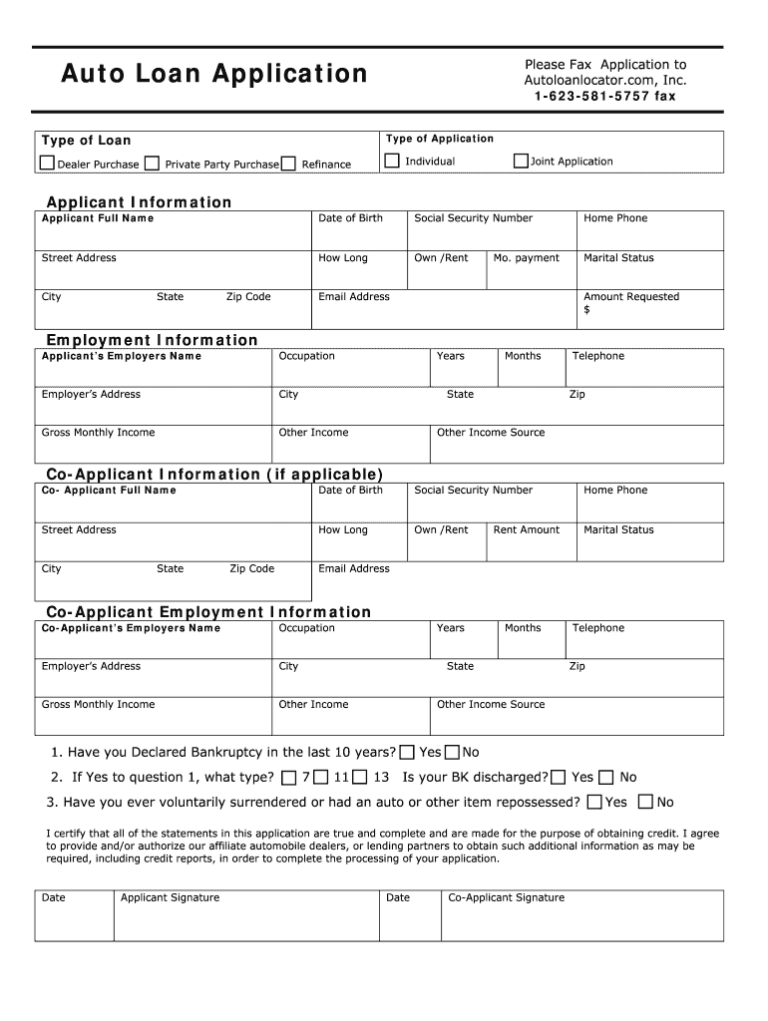
1. Gather Your Documentation
Before applying, have all necessary documents ready. This typically includes:
- Proof of identity (driver’s license, passport)
- Proof of residence (utility bill, lease agreement)
- Proof of income (pay stubs, tax returns, employment verification)
- Social Security Number
- Information about the vehicle you intend to purchase (if applicable, for pre-approval)
Having these ready streamlines the process and avoids delays.
2. Review Your Credit Report
Before applying, obtain a free copy of your credit report from each of the three major credit bureaus (Equifax, Experian, TransUnion) at AnnualCreditReport.com. Check for any errors or inaccuracies that could negatively impact your score. If you find any, dispute them immediately.
This proactive step can potentially boost your credit score, which, as we’ve discussed, can lead to a lower APR. A higher score means more favorable terms on your 4-year car loan.
3. Submit Applications Strategically
As mentioned, apply to several lenders within a short window. This allows credit bureaus to treat multiple inquiries for the same type of loan as a single inquiry, minimizing the impact on your credit score. Aim for a period of 14 to 45 days, depending on the credit scoring model.
Don’t just apply to the first lender you find. Cast a wide net to ensure you’re getting the most competitive offers available to you.
4. Negotiating the Final Terms
Once you have a pre-approval in hand, you’re in a strong position. When you go to the dealership, you can use your pre-approved rate as leverage. If the dealership offers you a better rate, great! If not, you have a solid backup.
Remember to negotiate the car price separately from the financing. Focus on getting the best price for the vehicle first, then discuss how you’ll pay for it. For further guidance on responsible borrowing, consider resources like the Consumer Financial Protection Bureau at .
Common Mistakes to Avoid & Pro Tips for a 4-Year Car Loan
Even with all the preparation, it’s easy to fall into common traps. Based on my experience, avoiding these pitfalls can save you significant money and stress over your 4-year car loan journey.
Common Mistakes to Avoid Are:
- Ignoring Your Credit Score: Not checking your credit report or taking steps to improve your score before applying. A few points can make a difference in your APR.
- Not Shopping Around for Loans: Settling for the first financing offer, especially from the dealership, without comparing rates from multiple lenders. This is a primary reason people overpay.
- Focusing Only on Monthly Payment: While important, fixating solely on a low monthly payment can lead to longer loan terms and significantly more interest paid over time. Always consider the total cost of the loan.
- Skipping a Down Payment: Not putting any money down means you’re borrowing the full cost of the car, which increases your risk, likely results in a higher APR, and can put you "underwater" on your loan quickly.
- Forgetting About Additional Costs: Overlooking insurance, maintenance, fuel, and registration costs when budgeting for a car. These can quickly strain your finances if not accounted for.
Pro Tips from Us for a Successful 4-Year Car Loan:
- Boost Your Credit Score: Pay bills on time, reduce credit card balances, and avoid opening new lines of credit in the months leading up to your car loan application.
- Save Aggressively for a Down Payment: The more you put down, the less you borrow, and the better your APR will likely be. Aim for at least 10-20%.
- Get Pre-Approved: This gives you a clear budget, a competitive APR to compare against, and significant negotiating power at the dealership.
- Understand Total Cost, Not Just Payment: Always calculate the total amount you’ll pay over the 4 years, including interest and fees. Use online loan calculators to help.
- Budget for More Than Just the Payment: Create a comprehensive budget that includes your loan payment, insurance, fuel, maintenance, and potential parking fees.
- Consider GAP Insurance: If you’re making a small down payment, GAP (Guaranteed Asset Protection) insurance can protect you if your car is totaled and you owe more than its market value.
Beyond the Loan: Smart Financial Habits
Securing a great APR on your 4-year car loan is a huge accomplishment, but your financial journey doesn’t end there. Maintaining smart habits will ensure you maximize your savings and manage your new asset responsibly.
Budgeting for All Car Expenses
Your monthly car payment is just one piece of the puzzle. Beyond the loan, you’ll have ongoing costs like fuel, insurance premiums, routine maintenance (oil changes, tire rotations), and potential unexpected repairs. Factor these into your overall monthly budget to avoid financial strain.
A good rule of thumb is to allocate around 15-20% of your take-home pay towards all car-related expenses, including the loan. This comprehensive approach ensures you’re not caught off guard.
Accelerating Payments (If Possible)
If your financial situation improves during your 4-year loan term, consider making extra payments. Even small additional contributions each month can significantly reduce the total interest you pay and shorten the loan term. Most auto loans do not have prepayment penalties, making this a great way to save money.
Even paying an extra $50 a month can shave off several months from your loan and hundreds of dollars in interest. Always confirm with your lender how extra payments are applied – ideally, they should go directly to the principal.
Refinancing Options: A Second Chance at a Lower APR
Your financial situation can change. If your credit score has improved significantly since you took out your 4-year car loan, or if market interest rates have dropped, you might be a candidate for refinancing. Refinancing means taking out a new loan to pay off your existing one, ideally at a lower APR.
This can lead to lower monthly payments or allow you to pay off the car even faster. It’s always worth exploring refinancing options about 12-18 months into your loan if conditions are favorable.
Conclusion: Drive Away Confidently with a Smart 4-Year Car Loan
Navigating the complexities of car loans, especially understanding the Annual Percentage Rate and the strategic role of your savings for a 4-year term, is a journey that requires careful planning and informed decisions. By taking the time to understand each factor discussed, you’re not just buying a car; you’re investing in your financial well-being.
Remember, a lower APR on your 4-year car loan translates directly into significant savings over time. Leverage your credit score, maximize your down payment, diligently shop around for the best rates, and never underestimate the power of an emergency fund. With these insights and strategies, you can confidently drive away in your new vehicle, knowing you’ve secured a deal that truly benefits you. Happy driving!