Unlocking Your Car Loan’s True Cost: A Comprehensive Guide to Figuring Out the Finance Charge
Unlocking Your Car Loan’s True Cost: A Comprehensive Guide to Figuring Out the Finance Charge Carloan.Guidemechanic.com
Buying a car is an exciting milestone, often representing freedom, convenience, or a necessary upgrade. Yet, beneath the shiny exterior and the thrill of a new ride lies a complex financial commitment: your car loan. While many focus on the monthly payment, a deeper understanding of the finance charge on your car loan is absolutely crucial. This often-overlooked figure reveals the true cost of borrowing and can significantly impact your financial well-being.
Based on my experience guiding countless individuals through their automotive financing journeys, one of the biggest misconceptions is that the interest rate alone tells the whole story. It doesn’t. The finance charge encapsulates the entire cost of borrowing, extending beyond just interest. It’s the hidden layer of expense that savvy consumers must understand to make truly informed decisions.
Unlocking Your Car Loan’s True Cost: A Comprehensive Guide to Figuring Out the Finance Charge
In this comprehensive guide, we’ll demystify the finance charge, breaking down its components, showing you how to calculate it, and equipping you with strategies to minimize its impact. Our ultimate goal is to empower you to navigate car financing with confidence, ensuring you secure the best possible deal and avoid costly surprises.
What Exactly is a Finance Charge? Demystifying the Core Concept
At its heart, a finance charge is the total cost a borrower pays for the privilege of using borrowed money. It’s the sum of all charges and fees imposed by a lender as a condition of extending credit. Think of it as the price tag for convenience, allowing you to drive your car today while paying for it over time.
This charge isn’t just a simple interest rate. It’s a broader category that includes the interest you pay on the principal loan amount, alongside various other fees. These additional fees can often catch borrowers by surprise if they don’t scrutinize their loan documents carefully. Understanding each component is vital for a complete picture.
From a professional standpoint, I always emphasize that the finance charge is the single most important number to understand after the principal amount itself. It tells you exactly how much extra you’re paying for the loan, beyond the car’s sticker price.
The Building Blocks: Key Factors Influencing Your Car Loan Finance Charge
Several interconnected elements work together to determine the final finance charge on your car loan. Each factor plays a significant role, and understanding their individual impact is key to taking control of your borrowing costs. Let’s break them down in detail.
1. The Principal Loan Amount: Your Starting Point
The principal loan amount is simply the initial sum of money you borrow to purchase the vehicle. This is the core figure upon which all interest and many fees will be calculated. It’s the difference between the car’s purchase price (minus taxes, registration, and other immediate costs) and any down payment or trade-in value you apply.
A higher principal amount will almost always result in a higher total finance charge, assuming all other factors remain constant. This is because interest and many fees are often a percentage of this initial sum. Reducing your principal through a larger down payment is one of the most effective ways to lower your overall borrowing costs.
2. The Interest Rate (APR): The Cost of Borrowing
The interest rate is perhaps the most well-known component of a loan’s cost. It represents the percentage charged by the lender for the use of their money, calculated on the outstanding principal balance. A higher interest rate directly translates to higher interest payments over the life of the loan.
However, it’s crucial to distinguish between the simple interest rate and the Annual Percentage Rate (APR). While the interest rate is just the percentage charged on the principal, the APR is a more comprehensive measure. We’ll delve deeper into APR shortly, but for now, remember that the interest rate is the engine driving a significant portion of your finance charge.
3. The Loan Term: Time is Money
The loan term refers to the duration over which you agree to repay the loan, typically expressed in months (e.g., 36, 48, 60, 72, or even 84 months). This factor has a profound impact on both your monthly payment and the total finance charge. A longer loan term will result in lower monthly payments, making the car seem more affordable upfront.
However, extending the loan term means you’re paying interest for a longer period. This invariably leads to a significantly higher total finance charge over the life of the loan. Conversely, a shorter loan term will have higher monthly payments but will drastically reduce the total interest paid, thus lowering your overall finance charge.
4. Loan Fees: The Hidden Extras
Beyond interest, lenders often charge various fees that contribute to the overall finance charge. These fees can vary widely depending on the lender, your state, and the specific loan product. It’s imperative to understand what these are before signing any agreement.
Common examples include origination fees (for processing the loan), documentation fees (for preparing paperwork), filing fees (for registering the lien), and sometimes even application fees. While some fees are standard, others might be negotiable or even avoidable. Always ask for a clear breakdown of all fees.
5. Your Credit Score: The Ultimate Influencer
Your credit score is arguably the most powerful determinant of the interest rate you’ll be offered, and consequently, a major factor in your finance charge. Lenders use your credit score as a primary indicator of your creditworthiness and your likelihood of repaying the loan. A higher credit score signals lower risk to lenders.
Borrowers with excellent credit scores typically qualify for the lowest interest rates and most favorable loan terms. Conversely, those with lower credit scores are perceived as higher risk, leading to higher interest rates and potentially higher fees. before applying for a car loan can save you thousands.
6. Down Payment: Reducing Your Burden
A down payment is the initial sum of money you pay upfront towards the purchase price of the car. This directly reduces the principal amount you need to borrow. As we discussed, a lower principal loan amount translates to lower interest payments and a reduced overall finance charge.
Making a substantial down payment not only lowers your finance charge but can also make you a more attractive borrower to lenders. It demonstrates financial stability and reduces the lender’s risk exposure, potentially leading to better interest rate offers. Pro tips from us: Aim for at least 10-20% of the car’s value as a down payment if possible.
Step-by-Step Guide: How to Calculate Your Car Loan Finance Charge
Figuring out the exact finance charge might seem daunting, but with the right approach, it’s quite manageable. There are a few methods you can employ, ranging from simple approximations to precise calculations.
1. Obtain Your Core Loan Details
Before you can calculate anything, you need to gather the essential information about your car loan. This includes:
- Principal Loan Amount: The amount you borrowed.
- Annual Percentage Rate (APR): The true annual cost of your loan, including interest and some fees.
- Loan Term: The total number of months you will be repaying the loan.
- Monthly Payment: The fixed amount you pay each month.
You can find these details in your loan agreement, often referred to as the "Truth in Lending Disclosure" or similar document. This document is a treasure trove of vital financial information.
2. Method 1: The Quick Approximation (Total Paid – Principal)
This is the simplest way to get a rough idea of your total finance charge, especially if you have your monthly payment amount.
Step A: Calculate Total Payments. Multiply your monthly payment by the total number of months in your loan term.
Example: Monthly Payment = $400, Loan Term = 60 months. Total Payments = $400 * 60 = $24,000.
Step B: Subtract the Principal. Take the total amount you will pay over the loan term and subtract the original principal loan amount.
Example: Principal Loan Amount = $20,000. Total Finance Charge (approx.) = $24,000 – $20,000 = $4,000.
This method gives you a good estimate of the total interest and other charges you’ll pay. However, it’s an approximation because the actual finance charge, as defined by the Truth in Lending Act, includes only interest and specific required charges, not all fees. It’s a good starting point for comparison.
3. Method 2: Utilizing Online Car Loan Calculators
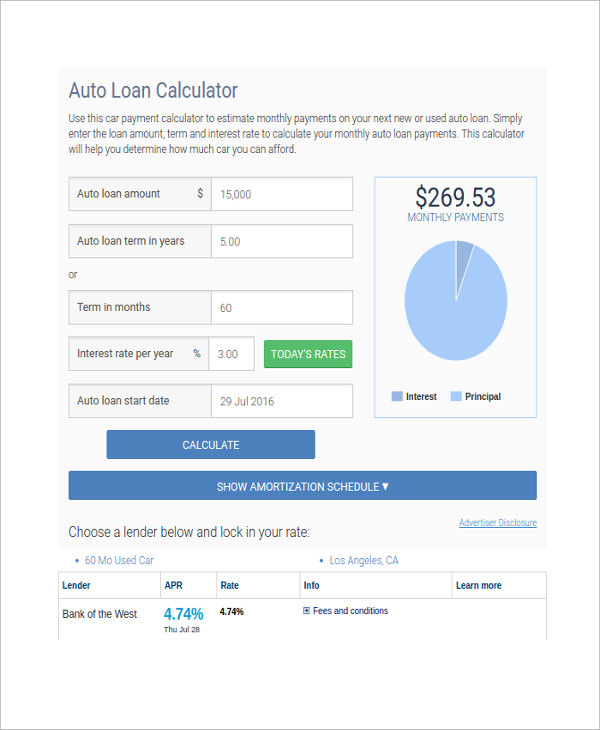
For a more accurate and hassle-free calculation, online car loan calculators are your best friends. Many reputable financial websites offer these tools.
How to use them:
- Input your principal loan amount.
- Enter the interest rate (or APR).
- Specify the loan term in months.
- The calculator will instantly provide your estimated monthly payment, total interest paid, and often the total finance charge.
Pro tips from us: Always use a calculator from a trusted financial institution or a well-known financial education site. This ensures the calculation methodology is sound. Look for calculators that allow you to include any upfront fees for a more precise finance charge estimate.
4. Method 3: The Official Loan Agreement (Most Accurate)
The absolute most accurate and legally binding way to figure out your finance charge is to refer to your official loan agreement. The Truth in Lending Disclosure Statement (TILA), which is legally required for most consumer loans, will explicitly state the "Finance Charge."
This document provides a detailed breakdown of all costs associated with your loan. It will clearly list the "Amount Financed," the "Finance Charge," and the "Total of Payments." This is the definitive source for the exact amount you are paying beyond the principal. Always read this document thoroughly before signing.
5. Deconstructing the Amortization Table
An amortization table is a schedule that breaks down each loan payment into its principal and interest components over the life of the loan. While not directly calculating the total finance charge, it visually demonstrates how your payments are allocated.
In the early stages of a car loan, a larger portion of your monthly payment goes towards interest, and a smaller portion reduces the principal. As the loan progresses, this allocation shifts, with more of your payment going towards the principal. Understanding this helps you see why making extra payments early on can significantly reduce your total finance charge. It directly tackles the principal, reducing the base on which future interest is calculated.
Understanding the Annual Percentage Rate (APR) vs. Interest Rate
This distinction is fundamental to grasping the true cost of your car loan. While often used interchangeably, they are not the same thing.
The interest rate is simply the percentage charged by the lender on the principal loan amount. It’s the raw cost of borrowing the money, expressed as a yearly rate.
The Annual Percentage Rate (APR), on the other hand, is a broader and more comprehensive measure of the total cost of borrowing. It includes the interest rate plus certain fees associated with the loan, expressed as an annual percentage. These fees can include origination fees, closing costs, and other lender charges.
Why is APR more important? The APR provides a more accurate representation of the actual cost of your loan. When comparing loan offers from different lenders, always compare their APRs, not just their interest rates. A loan with a slightly lower interest rate but higher fees could end up having a higher APR and thus a higher total finance charge than a loan with a slightly higher interest rate but no fees. This is a common mistake to avoid.
Strategies to Reduce Your Car Loan Finance Charge
Once you understand how finance charges are calculated, you’re empowered to take steps to minimize them. Here are proven strategies to help you save money over the life of your car loan.
1. Improve Your Credit Score Before Applying
This is perhaps the most impactful step you can take. A higher credit score signals to lenders that you are a responsible borrower, making you eligible for lower interest rates and more favorable terms. Start checking your credit report and score months before you plan to buy a car. Dispute any errors, pay down existing debts, and avoid opening new credit lines.
Based on my experience, even a slight improvement in your credit score can translate into significantly lower APRs, saving you hundreds or even thousands of dollars in finance charges over the loan term.
2. Make a Larger Down Payment
As discussed, a larger down payment directly reduces the principal amount you need to borrow. Less principal means less interest accrues over the life of the loan, and therefore a lower total finance charge. It also strengthens your loan application.
Pro tips from us: Aim for a down payment of at least 20% to avoid being "upside down" (owing more than the car is worth) early in the loan term, which can be a financial trap.
3. Shop Around for Lenders
Never take the first loan offer you receive, especially not from the dealership. Compare offers from multiple lenders, including banks, credit unions, and online lenders. Each lender has different criteria and pricing structures, so their APRs can vary significantly for the same borrower.
Common mistakes to avoid are limiting yourself to only one or two lenders. Getting pre-approved from several sources within a short window (usually 14-45 days, depending on the credit bureau) will only count as a single hard inquiry on your credit report, so shop aggressively.
4. Choose a Shorter Loan Term (If Affordable)
While a longer loan term offers lower monthly payments, it dramatically increases your total finance charge due to paying interest for a longer period. If your budget allows, opt for the shortest loan term you can comfortably afford.
For instance, comparing a 60-month loan to a 72-month loan for the same principal and APR will reveal a substantial difference in total finance charges. The shorter term might mean higher monthly payments, but the overall savings are often significant.
5. Negotiate Fees Where Possible
Some loan fees, such as documentation or administrative fees, might be negotiable, especially at smaller dealerships or certain lenders. Always ask for a detailed breakdown of all fees and question any that seem excessive or unclear. You might be surprised at what you can get waived or reduced.
However, be aware that some fees, like state-mandated titling or registration fees, are non-negotiable. Focus your negotiation efforts on lender-specific charges.
6. Refinance Your Car Loan
If you’ve already taken out a car loan but your credit score has improved, or interest rates have dropped, consider refinancing. Refinancing involves taking out a new loan to pay off your existing one, ideally at a lower interest rate or with more favorable terms.
Refinancing can significantly reduce your monthly payments and/or your total finance charge. It’s a strategy worth exploring if your financial situation has improved since you first bought the car. and how they impact refinancing.
7. Pay More Than the Minimum Payment
Even small extra payments can have a big impact over time. When you pay more than your minimum monthly payment, instruct your lender to apply the excess amount directly to the principal balance. This reduces the amount on which future interest is calculated.
By chipping away at the principal faster, you accelerate the loan repayment and reduce the total interest you’ll pay, thereby lowering your overall finance charge. It’s a simple yet powerful strategy for long-term savings.
Common Mistakes to Avoid When Dealing with Car Loan Finance Charges
Navigating car loans can be tricky, and several pitfalls can lead to higher finance charges and unnecessary financial strain. Being aware of these common mistakes can save you a great deal of money and frustration.
1. Not Reading the Loan Agreement Carefully: This is perhaps the biggest mistake. The loan agreement, especially the Truth in Lending Disclosure, contains all the critical information, including the exact finance charge. Many borrowers skim or skip this vital document, missing crucial details about fees, penalties, and payment schedules.
2. Focusing Only on the Monthly Payment: While an affordable monthly payment is important, fixating solely on it can lead you to accept longer loan terms and higher interest rates, ultimately increasing your total finance charge. Always consider the total cost of the loan, not just the monthly outlay.
3. Ignoring the APR: As discussed, the APR provides a more accurate picture of the loan’s true cost than the simple interest rate. Neglecting to compare APRs across different loan offers is a missed opportunity to save money.
4. Not Shopping Around for Lenders: Settling for the first loan offer, often from the dealership, can be costly. Dealerships often mark up interest rates or include additional fees. Always seek pre-approvals from multiple independent lenders to ensure you’re getting the most competitive rate.
5. Falling for "0% APR" Traps: While seemingly attractive, 0% APR offers often come with stringent conditions, such as perfect credit requirements, shorter loan terms with very high payments, or deferred interest that kicks in if you miss a payment. Always read the fine print to understand the true cost and conditions.
6. Not Considering Prepayment Penalties: Some loan agreements include clauses that charge you a fee for paying off your loan early. While less common with car loans today, it’s essential to check for this. If you plan to make extra payments or pay off the loan early, a prepayment penalty could negate some of your savings.
The Long-Term Impact of Finance Charges: Beyond the Monthly Bill
Understanding and managing your car loan finance charge isn’t just about saving a few dollars; it has a significant long-term impact on your overall financial health and wealth accumulation. High finance charges mean more of your hard-earned money is going towards the cost of borrowing rather than building equity or investing.
Every dollar saved on finance charges is a dollar that can be put towards other financial goals, such as saving for a down payment on a home, contributing to retirement, or investing. It’s an opportunity cost. Smart borrowing decisions today free up capital for future opportunities, paving the way for greater financial freedom.
Conclusion: Empowering Your Car Loan Journey
Figuring out the finance charge on your car loan is a fundamental step towards becoming a financially savvy car owner. It’s not just a number; it’s the gateway to understanding the true cost of your vehicle and making empowered decisions that protect your wallet. From dissecting the components of the charge to implementing strategies for reduction, you now have a comprehensive toolkit.
Remember, knowledge is power in the world of finance. By meticulously reviewing your loan documents, comparing offers, and proactively managing your credit, you can significantly reduce your finance charge and save a substantial amount of money over the life of your car loan. Don’t let the excitement of a new car overshadow the importance of smart financial planning. Drive away with confidence, knowing you’ve secured a deal that truly benefits you.