Unlocking Your Ride: The Definitive Guide to KBB Used Car Loan Value
Unlocking Your Ride: The Definitive Guide to KBB Used Car Loan Value Carloan.Guidemechanic.com
Buying a used car is often a journey filled with excitement, anticipation, and a fair share of questions. One of the most crucial aspects, especially when financing, revolves around understanding the vehicle’s true worth. This is where the Kelley Blue Book (KBB) steps in, acting as a foundational pillar in determining your used car’s loan value. Far more than just a pricing guide, KBB plays a pivotal role in the entire used car financing landscape.
As an expert in the automotive and finance sectors, I’ve seen firsthand how crucial it is for both buyers and sellers to grasp the intricacies of KBB values. This comprehensive guide will demystify the KBB used car loan value, explaining how it impacts your financing options, negotiation power, and overall car ownership experience. We’ll delve deep into how lenders perceive these values, common pitfalls to avoid, and pro tips to secure the best possible deal.
Unlocking Your Ride: The Definitive Guide to KBB Used Car Loan Value
What Exactly is Kelley Blue Book (KBB) and Why Does It Matter for Used Cars?
For decades, Kelley Blue Book has been the gold standard for vehicle valuation in the United States. Founded in 1926, it began as a guide for car dealers and has since evolved into an indispensable resource for consumers, lenders, and insurers alike. Its long-standing reputation is built on a robust methodology that considers a vast array of data points to provide accurate, up-to-date vehicle prices.
KBB’s significance in the used car market cannot be overstated. It provides a standardized benchmark, bringing transparency to transactions that might otherwise feel opaque. Without a reliable third-party valuation tool, negotiating prices or securing loans would be far more challenging and prone to unfair practices.
How KBB Calculates Its Values: A Deep Dive
KBB doesn’t just pull numbers out of thin air; its valuation process is incredibly sophisticated. They analyze millions of data points daily, encompassing everything from actual vehicle sales at dealerships and private party transactions to economic conditions and seasonal demand. This complex algorithm ensures their values reflect the current market reality.
Key factors that influence a KBB valuation include:
- Vehicle Make, Model, and Year: The fundamental identity of the car.
- Mileage: Lower mileage generally translates to higher value.
- Condition: This is a subjective but critical factor, ranging from "Poor" to "Excellent." KBB provides detailed guidelines for assessing condition.
- Optional Features and Trim Level: Upgrades like leather seats, navigation systems, or premium sound systems can boost value.
- Geographic Location: Market demand and pricing can vary significantly by region.
- Seasonal Trends: Convertibles might fetch more in spring, while SUVs could be pricier in winter.
- Economic Factors: Fuel prices, interest rates, and overall economic health can sway values.
Understanding these factors helps you appreciate the nuance behind KBB’s figures. It’s not just a single number; it’s a dynamic assessment influenced by a multitude of variables.
Different KBB Values and Their Implications
KBB provides several distinct values, each serving a specific purpose in the used car transaction process. Confusing these can lead to misinformed decisions, especially when applying for a loan.
- Trade-in Value: This is the amount a dealership is likely to offer you if you trade in your current vehicle towards a new purchase. It’s typically the lowest value, as the dealer needs room to recondition and resell the car for a profit.
- Private Party Value: This represents the price you could expect to get if you sell your car directly to another individual. It’s usually higher than the trade-in value but requires more effort on your part (marketing, showing the car, handling paperwork).
- Retail Value: Also known as the "Suggested Retail Value," this is the price you would likely pay for a used car at a dealership. It’s the highest of the three, reflecting the dealer’s overhead, reconditioning costs, warranty, and profit margin.
When discussing "KBB Used Car Loan Value," lenders primarily look at the Retail Value or a slightly adjusted version of it. They want to ensure the loan amount doesn’t exceed the actual market worth of the collateral.
The Critical Link: KBB Value and Your Used Car Loan
This is where the rubber meets the road. Lenders, whether banks, credit unions, or captive finance companies, don’t just hand out money based on your word. They need to assess the risk involved, and the KBB value of the used car is a cornerstone of that assessment. It directly influences how much you can borrow, your interest rate, and even the loan terms.
Lenders view the car as collateral for the loan. If you default on your payments, they need to be able to repossess and sell the vehicle to recoup their losses. Therefore, they are extremely cautious about lending more money than the car is worth on the open market.
The All-Important Loan-to-Value (LTV) Ratio
The concept of the Loan-to-Value (LTV) ratio is central to used car financing. It’s a simple calculation: the loan amount divided by the vehicle’s appraised value (often determined by KBB). For example, if you borrow $15,000 for a car KBB values at $18,000, your LTV is approximately 83%.
Lenders typically have maximum LTV thresholds they are willing to accept, especially for used vehicles. A high LTV, say 120% (meaning you borrowed more than the car is worth), signals a higher risk to the lender. This can happen if you roll negative equity from a previous loan into the new one or finance additional products like extended warranties without a sufficient down payment.
Based on my experience, aiming for an LTV of 80-90% is ideal for securing favorable terms. A lower LTV demonstrates to the lender that you have equity in the vehicle from day one, significantly reducing their risk.
Impact on Loan Approval, Interest Rates, and Terms
The KBB used car loan value, through the LTV ratio, directly impacts several critical aspects of your financing:
- Loan Approval: If the car’s KBB value is too low relative to the loan amount you’re seeking, a lender might simply deny your application. They won’t want to be "upside down" on the loan from the start.
- Interest Rates: A higher LTV often translates to a higher interest rate. Lenders compensate for increased risk by charging more for the money they lend. Conversely, a lower LTV, supported by a strong KBB valuation, can help you qualify for lower rates.
- Loan Terms: The KBB value can also influence the maximum loan term a lender is willing to offer. For older or higher-mileage vehicles with lower KBB values, lenders might restrict you to shorter loan terms to mitigate the risk of depreciation outpacing your payments.
This relationship highlights why it’s essential to understand the KBB value before you even start serious negotiations or loan applications. It empowers you to make informed decisions and present yourself as a low-risk borrower.
Navigating KBB Values for Buyers: Getting the Best Loan
As a buyer, mastering KBB values is your secret weapon. It allows you to approach dealerships or private sellers with confidence, negotiate effectively, and ensure you’re getting a fair deal on both the car and your financing.
How to Look Up KBB Values Accurately
Getting an accurate KBB valuation requires a bit of homework. Don’t just punch in the make and model; be as detailed as possible.
- Visit KBB.com: Go directly to their official website.
- Enter Vehicle Details: Input the exact year, make, model, and trim level.
- Specify Mileage: Provide the precise mileage of the car you’re interested in.
- Assess Condition Objectively: This is crucial. Use KBB’s detailed guidelines (e.g., "Excellent" requires no mechanical defects, perfect paint; "Good" might have minor blemishes, etc.). Be honest, or even slightly conservative, in your assessment.
- Select Optional Features: Add any special features or packages the car has.
- Input Your Zip Code: Market values vary geographically.
By following these steps, you’ll get a range of values tailored to the specific vehicle and your local market. Print these out or save them for reference.
Understanding the Different Values for Buying
When you’re buying from a dealership, focus primarily on the KBB Retail Value. This is the benchmark for what a reputable dealer should charge for a vehicle in a specific condition. If you’re buying from a private party, the KBB Private Party Value is your target.
Use these values as your starting point for negotiations. If a dealer is asking significantly more than the KBB Retail Value, be prepared to ask why, or walk away. Similarly, if a private seller is asking above the Private Party Value, you have solid ground for negotiation.
Negotiation Strategies Based on KBB
Armed with KBB knowledge, your negotiation power significantly increases.
- For Dealerships: If the advertised price is higher than KBB Retail, point this out. Ask if they can justify the premium with specific features, warranties, or reconditioning. If the car’s condition is worse than "Good," use that to argue for a lower price, aligning it with the KBB value for that condition.
- For Private Sellers: The KBB Private Party Value is your ideal target. If the seller is asking for more, politely present the KBB valuation and explain why you believe a lower price is fair. Be prepared to compromise slightly, but always keep the KBB value in mind as your ceiling.
Pro tips from us: Always get a pre-purchase inspection from an independent mechanic. Even a car with a good KBB value might have hidden issues that could impact its true worth and your long-term costs. This inspection can also provide additional negotiation leverage if problems are found.
Navigating KBB Values for Sellers: Maximizing Your Sale
If you’re selling a used car, KBB is equally important. It helps you set a realistic and competitive price, attracting buyers and justifying your asking amount. Overpricing based on emotion is a common mistake that leads to prolonged listings and frustration.
Understanding the Different Values for Selling
When selling your car, whether to a dealership or a private party, you’ll be looking at different KBB values.
- Selling to a Dealership (Trade-in): The KBB Trade-in Value is what you should expect. Understand that dealers need to make a profit, so this will be lower than what you might get selling privately. However, it offers convenience and tax savings in some states (you only pay sales tax on the difference between your new car price and your trade-in value).
- Selling to a Private Party: The KBB Private Party Value is your goal. This is the sweet spot where you maximize your return without overpricing the market.
Be realistic about your car’s condition. While you might see your car as "Excellent," a buyer or dealer will likely be more critical. Use KBB’s detailed condition guide honestly to avoid disappointment during negotiation.
Pricing Your Car Competitively
Once you have your KBB Private Party Value, consider pricing your car slightly above it, but within a reasonable range. This gives you a little wiggle room for negotiation. However, don’t go too high, as you risk scaring off potential buyers who also check KBB.
Research similar listings in your area on platforms like AutoTrader, CarGurus, or local classifieds. See what cars with similar mileage, condition, and features are selling for. This market research, combined with KBB, will help you arrive at the optimal asking price.
Preparing Your Car for Sale to Enhance Its KBB Value
You can actively work to improve your car’s KBB value before selling. Small investments can yield significant returns.
- Thorough Cleaning and Detailing: A clean car makes a powerful first impression. Detail the interior, wash and wax the exterior, and clean the engine bay.
- Minor Repairs: Fix small, inexpensive issues like burned-out light bulbs, minor dents, or scratches. These seemingly small flaws can give buyers leverage to ask for a much larger discount.
- Maintenance Records: Gather all service records. A well-documented maintenance history instills confidence in buyers and can justify a higher price.
- Tire Condition: Ensure tires have good tread. Worn tires are a major red flag for buyers.
- Address Warning Lights: Get any "Check Engine" or other warning lights resolved before showing the car.
Common mistakes sellers make are overestimating their car’s condition and not investing in minor reconditioning. A little effort here can move your car from "Good" to "Very Good" on the KBB scale, potentially adding hundreds or even thousands to its value.
Beyond KBB: Other Factors Influencing Your Used Car Loan
While KBB provides a crucial foundation, it’s just one piece of the puzzle. Several other factors play a significant role in determining your eligibility and terms for a used car loan. Understanding these will give you a holistic view of the financing process.
Your Credit Score
Your credit score is arguably the most influential factor, second only to the car’s value, in securing a favorable loan. A strong credit score (generally 700+) indicates to lenders that you are a reliable borrower with a history of making timely payments.
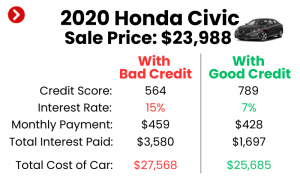
Conversely, a lower credit score signals higher risk, leading to higher interest rates or even loan denial. It’s always advisable to check your credit score and report before applying for a loan, addressing any inaccuracies beforehand.
The Down Payment
A substantial down payment significantly reduces the amount you need to borrow, thereby lowering your LTV ratio. This makes you a more attractive borrower to lenders and can lead to lower interest rates and smaller monthly payments.
Based on my experience, aiming for at least 10-20% of the vehicle’s purchase price as a down payment is a smart financial move. It creates instant equity and acts as a buffer against rapid depreciation, especially for used cars.
Loan Term (Length of the Loan)
The loan term, or how long you have to repay the loan, affects your monthly payments and the total interest you’ll pay. Longer terms mean lower monthly payments, but you’ll pay more in interest over the life of the loan. Shorter terms mean higher monthly payments but less total interest paid.
Lenders also consider the age and mileage of the used car when determining maximum loan terms. An older car might not qualify for a 72-month loan, even if you desire one.
Interest Rates
The interest rate is the cost of borrowing money, expressed as a percentage of the loan amount. It’s influenced by your credit score, the loan term, the down payment, and current market conditions. Even a small difference in interest rate can save you hundreds or thousands of dollars over the loan’s life.
Pro tip: Don’t just accept the first interest rate offered. Shop around with multiple lenders (banks, credit unions, online lenders) to compare rates and terms. This competition can often secure you a better deal.
Additional Fees and Costs
Remember to factor in other costs beyond the car’s price and interest. These can include:
- Sales Tax: Varies by state.
- Registration and Licensing Fees: Required to legally operate the vehicle.
- Documentation Fees: Charged by dealerships for processing paperwork.
- Extended Warranties/Service Contracts: Optional but can significantly add to your loan amount.
- Gap Insurance: Highly recommended for used cars, especially if you have a low down payment, to cover the "gap" between what you owe and what your insurance company will pay if your car is totaled.
These additional costs can sometimes inflate your loan amount beyond the car’s KBB value if not properly accounted for with a down payment.
Common Pitfalls and How to Avoid Them
Even with all the right information, it’s easy to fall into common traps when financing a used car. Being aware of these pitfalls can save you money and stress.
1. Underestimating Depreciation
Used cars, like all vehicles, continue to depreciate. While the steepest drop occurs in the first few years, used cars still lose value. If you finance a car with a high LTV and little down payment, you could quickly owe more than the car is worth.
Avoid this: Make a significant down payment, consider a shorter loan term, and ensure your loan amount is well aligned with the KBB value.
2. Focusing Only on Monthly Payments
It’s tempting to fixate on how much you’ll pay each month. However, a low monthly payment can often mean a longer loan term and much more interest paid over time.
Avoid this: Always look at the total cost of the loan, including interest, over its entire duration. Calculate the difference between a 48-month and a 60-month loan.
3. Not Getting Pre-Approved
Walking into a dealership without pre-approval for a loan is like going to battle without armor. You won’t know your true borrowing power or the best interest rate you qualify for. This leaves you vulnerable to the dealer’s financing options, which might not be the most competitive.
Avoid this: Apply for pre-approval from your bank, credit union, or an online lender before you start shopping. This gives you a benchmark and strengthens your negotiating position.
4. Ignoring Vehicle Condition and History
A low KBB value might tempt you with a "bargain," but it could also signal significant underlying issues. Relying solely on KBB without verifying the car’s actual condition is a major risk.
Avoid this: Always get a pre-purchase inspection from an independent mechanic. Obtain a vehicle history report (like CarFax or AutoCheck) to check for accidents, salvage titles, flood damage, and service history. This ensures the car’s condition matches its KBB valuation.
Based on my experience, many buyers regret skipping the pre-purchase inspection. What seems like a minor issue on the lot can quickly turn into a costly repair.
Pro Tips for a Smooth Used Car Loan Process
To truly master the KBB used car loan value and the entire financing journey, incorporate these expert tips into your process.
- Research Diligently: Start your research on KBB.com to understand realistic values. Then, expand to other pricing guides like Edmunds or NADA Guides for a broader perspective. Compare these with actual listings in your area.
- Get Multiple Loan Offers: Don’t settle for the first loan offer you receive. Apply to several banks, credit unions, and online lenders. Compare their interest rates, terms, and fees. This competition can save you a significant amount of money.
- Consider Refinancing: If you’ve already purchased a used car and your credit score has improved, or if interest rates have dropped, consider refinancing your existing loan. This could lower your monthly payments or reduce the total interest paid.
- Understand All Terms and Conditions: Before signing any paperwork, read the loan agreement thoroughly. Understand the interest rate, APR, loan term, total amount financed, and any penalties for late payments or early payoff. Ask questions until you’re completely clear.
- Factor in Total Cost of Ownership: Beyond the loan, consider insurance, maintenance, fuel costs, and potential repairs. A cheap car with a great KBB loan value might be expensive to own if it’s unreliable or inefficient.
For further reading on managing your car’s financial aspects, you might find our article on Understanding Car Loan Interest Rates particularly helpful. And if you’re deep in the buying process, make sure to check out The Ultimate Used Car Buying Checklist to cover all your bases.
Conclusion: Your Roadmap to Smart Used Car Financing
Navigating the world of used car loans doesn’t have to be daunting. By thoroughly understanding the KBB Used Car Loan Value, you gain a powerful tool that empowers you throughout the entire process. From setting a realistic budget and negotiating a fair price to securing favorable financing terms, KBB acts as your trusted guide.
Remember, the goal is not just to get a car, but to get a smart car deal. This means ensuring the loan amount aligns with the vehicle’s true market worth, your financial health, and your long-term goals. Arm yourself with knowledge, conduct meticulous research, and don’t hesitate to ask questions. With KBB as your ally, you’re well on your way to driving off in your next used car with confidence and financial peace of mind.
For the most accurate and up-to-date valuations, always refer to the official Kelley Blue Book website: KBB.com.